22A merry heart makes good medicine, but a broken spirit dries the bone.
Proverbs 17:22 – The Keys of the Kingdom Holy Bible
12I know that there is nothing good for anyone except to be happy and live the best life he can while he is alive. 13Indeed, that everyone should eat and drink and enjoy himself, in return for his labours, is a gift of God
Ecclesiastes 3: 12-13 – The Revised English Bible
19Or do you not know that your body is a temple of the holy spirit in you, which you have from God, and you are not your own? 20For you have been bought at a price. Glorify God, therefore, in your body, and in your spirit, which are God’s.
1 Corinthians 6: 19-20 – The Keys of the Kingdom Holy Bible
My last post covered some of the issues that relate to our physical health. This time I wish to touch on other subjects, such as food and farming, and the effects of other issues on our health. It’s worth starting with mental health, not least because most medics would agree that poor mental health often results in poor physical health. But here’s the rub – does the medical fraternity understand precisely why this happens? No.
There’s now a growing body of research that shows that fear can have a hugely negative effect on our health, as can worry and stress. We have a growing number of our citizens who are defined as ‘long-term ill.’ Almost 20% of our working-age population is now too ill to be able to work.
So, what’s causing this? I grew up in a world where, if you felt depressed or anxious, you were told to ‘pull yourself together.’ No-one who, like me, has suffered from severe depression and has had suicidal thoughts, could ever think for a second that this was a sensible approach to depression. But there’s been such an over-reaction to these ‘Victorian’ ideas, that it’s now possible to read articles that seem almost to celebrate being depressed and to rejoice in being a victim. You have to share your misery with the general public, as that, apparently, makes you feel better? Oh, really? I’m pleased to say that I haven’t had any problems with depression for decades, but looking back, I’m sure that if I’d shared my travails with people I didn’t know, that wouldn’t have helped, but in all probability would have made me revel even more in my own misery. My psychiatrist at the time told me that anti-depressants were not going to make me better, but they might possibly help to enable me to grapple the root causes of my depression. In this, he was honest, but there’s now a growing body of evidence that even that may be overstated, despite the mass prescription of these drugs.
What might those root causes of depression in our general population be? Well, I think it would be a brave person who would state that these issues:
Lockdowns, “climate change,” aggression in social media, restrictions on free speech, psychological ‘nudging’ by the government, massive cost of living increases, power cuts, mass immigration, fear of knife attack and rape on our streets, and such issues as ‘men can become women’
have absolutely no effect on our state of mind. They very obviously do. It seems to me that we have part of the clue to many mental health issues in our own hands. And, dare I say it, if we’re told over many years that there’s no God, and the only real meaning of life is to store up material possessions, then we should not be surprised that, when eco-warriors say we have to deprive ourselves of possessions to ‘save the planet’, that impacts peoples’ feelings of well-being.
Exercise and Sunlight
We’re the most sedentary generation in history. Lack of exercise is known to worsen our health, particularly if it’s associated with being overweight. Less well-known, but perhaps of even greater importance, is the fact that most of us live almost all of our lives indoors. Sunshine not only lifts our mood, but also supplies us with one of the few natural sources of Vitamin D. And Vitamin D is thought to be one of the most crucial factors in maintaining a healthy immune system. People have become scared of skin cancer, but researchers have said that plenty of sunshine on the skin (as long as there’s no burning) vastly outweighs the small risk of skin cancer. See this excellent article by Dr Sarah Myhill for more details about why Vitamin D is so essential: https://tinyurl.com/yu9ke684
Food and drink
What we eat and drink have the greatest impact on our health. Many serious diseases are caused by poor mitochondrial health (many articles explaining what this is can be found on the Internet.) And what we eat is a crucial part of our mitochondrial health. If you look up the NHS advice on diet, it includes an exhortation to the following things:
‘eat less saturated fat’, ‘base meals on starchy carbohydrates’, ‘choose unsaturated oils and spreads’ and ‘choose low fat dairy products.’
There are a huge number of experts who now believe that all these pieces of advice are the very opposite of a healthy diet, which is one of several reasons why I think a case can be made that we don’t care about our health. I went onto a so-called Keto ‘diet’ three and a half years ago. Within three months, I had lost 12% of my body weight (which I’ve never regained); I felt healthier and I had more energy. The reason for the inverted commas around ‘Keto’ is that it isn’t so much a ‘diet’ as a different way of life that we need to adopt for ever. I don’t remember feeling hungry once since I started this. Hunger is the impact most ‘calorie-controlled diets’ have on our metabolism, which is why you need such monstrous will-power to stick to them. And it’s why, when you come off such a diet, the weight piles back on. When we become hungry, we eat more; it’s how we’re made. The reason that carbs in large quantities are so bad is because they convert rapidly to sugar in our bodies. That sugar passes through the body quickly, making us feel hungry again in short order. Surely, I hear you say, humans have eaten bread for ever? Yes, but it’s only relatively recently that people have started having toast for breakfast, sandwiches for lunch and pasta or pizza for supper (maybe with chips on the side). If you’re not convinced, then please read Eat Rich, Live Long by Ivor Cummins and Dr Jeffrey Gerber. The book explains why and how it works, and will also dispel other silly ideas about diet that are still widely publicised, despite being debunked many years ago (for example there’s a whole section about cholesterol).
What a keto ‘diet’ means in practice is that we need to eliminate as many of the following foods as possible: bread, pasta, rice, potatoes, grains, sugar and processed foods. And instead, increase your intake of fatty meats, eggs, dairy products, nuts and fresh fruit and vegetables (be slightly wary of eating large quantities of fruit, as fructose levels can be high, in many fruits.) Keto diets have been shown to have almost miraculous effects on a huge range of health conditions, including epilepsy, type 2 diabetes, ADHD and many other conditions that are increasingly blighting our modern world (as well as massively reducing obesity by cutting out its root causes.) And maybe our poor diets are directly or indirectly causing the rise in allergies that I noted in Part One of this article?
One of the problems that we also suffer from, is that our food is now less fresh that it was historically, and as a result, many nutrients that are essential to our mitochondrial health can be missing from the modern diet. Seek out high quality supplements, to make up for these. See, for example www.clivedecarle.com who gives excellent advice on this subject. I don’t get paid by Mr de Carle!
Refined oils
One of the other problems, seldom discussed, in our modern diet is the role taken by highly refined oils. Some of these are much worse than others. It’s worth touching on ‘oilseed rape’ (known in some parts of the world as canola), as this plant was never intended to be food for humans – it was originally used only as oil for industrial purposes such as lubricants, hydraulic fluids and plastics. Then some bright spark had the idea of genetically modifying the plant so that it could be eaten by humans, by reducing the naturally occurring erucic acid in the plant, which is toxic to humans. And ‘reducing’ is the word, not eliminating; there’s so much of this oil in so many different products, that many people are consuming far more erucic acid than is safe. In addition, most rapeseed oil is highly refined and heavily processed – making it pro-inflammatory and full of chemicals. For these reasons, one expert has said: ‘Buy rapeseed oil and put it in your mower, by all means. Under no circumstances should you be eating it.’ What can you use instead? Cold pressed Virgin Olive Oil, Coconut oil and avocado oil are all good, as is natural butter (but not ‘spreadable’ butter, most of which includes rape oil.) Try to avoid all refined oils, and in particular rapeseed, soybean, corn oil and sunflower oil. This is particularly important advice if you deep fry foods such as chips. You need to be aware that many highly processed foods and ‘ready meals’ include these products; you’ll have to search far for mayonnaise, for example, made without rape oil.
Farming practices
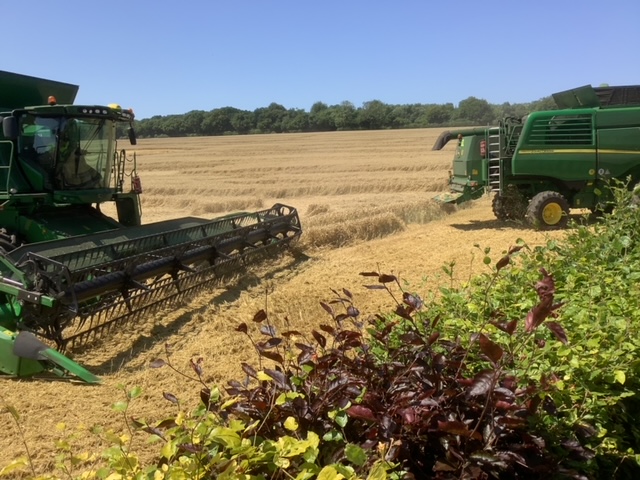
Our food and hence health is obviously also heavily impacted by farming practices, which have changed out of all recognition over my lifetime. Farmers are now wedded to sowing their arable crops using ‘min till’ or ‘no till’ systems. These mean that the soil is never ploughed (I don’t think my local farmer even owns a plough). Official (DEFRA) government advice is that such systems save water, encourage worms etc and they advise farmers to ‘chop and spread the harvested straw.’ I can easily see the effect of this on the field opposite me; the field has just been harrowed (the process that follows harvesting, replaces ploughing and is much shallower.) The surface of the field is literally covered in the rape straw from the crop, with huge stalks and roots of 2 cm diameter or so, scattered on the surface. I genuinely wonder if such practices encourage, or discourage, germination of the following year’s crop? Certainly there were large patches on this field that did not germinate when planted last year (even after a heavy spreading of sewage sludge the year before – see my previous article about this sludge):
https://reflectivepreacher.org/2024/08/02/the-facts-show-we-dont-care-about-our-environment/
And growing rapeseed demands a heavy use of chemicals, as it’s subject to a variety of different diseases and has a strong tendency to re-germinate after harvest, requiring spraying with glyphosate, which is thought to be a carcinogen. Gone are the days when farmers might spray their fields once or twice a year against aphid attack etc. I would estimate that the field in front of our house has been sprayed approximately 8 times in the last twelve months; we never know what chemicals are being used, as there’s no requirement for the farmer to tell us. And the bad news is that many of these chemicals end up in the final food products. Is this a source of our population’s worsening health? I think it would be hard to dispute this. And it’s difficult not to worry about what the long-term effects of current farming practices might be. There’s a fear that the soil itself is being compacted, degraded and stripped of its goodness and nutrients, so that long-term an ever-increasing volume of chemicals and fertilisers will be needed. I should add that I’m not a trained agrarian, but I have been a very keen observer of farming practices throughout my whole life. I was born on a farm, I’ve lived in the countryside virtually all my life and for five years I owned a small farm (as a hobby).
Conclusion
Overall, the best nutrition experts advise that it’s wise to avoid eating anything that your ancestors would not have had as part of their diet. Buy the best meat and fish that you can afford (leave insects for the birds and for Bill Gates!), buy the freshest vegetables you can, which means that the nearer to you they were grown, the fresher they’re likely to be. Buy products when they’re in season, as they’re then less likely to have been treated ‘artificially’ to make them grow out of season. Do not buy processed or ‘ready’ foods (just one look at the ingredients should put you off!) and throw away your fear of fat. Use full fat milk instead of the white, watery, low-fat milks that are an apology for the word milk! Our systems need fat; when you eat healthy fat, you feel less hungry and may eventually be able to consider building fasts into your routine. Fasting is good for the body, the soul, and has a long and creditable theology!
Do your own research on food and farming and you’ll maybe find that a whole new world opens up at your feet. And, most importantly of all, you’ll feel and be healthier in mind, body and spirit!
Heavenly Father, we’ve sacrificed our health. as a result of chasing after convenience. Encourage us to look at food as a priceless gift from you, to be cherished for its natural qualities, lack of chemicals and toxins, its freshness and seasonality. That way, we can all live healthier lives, the better to sing our praises of thanksgiving for all the blessings that you’ve showered on us. Amen
Discover more from Reflective Preacher
Subscribe to get the latest posts sent to your email.
 Reflective Preacher