34I give you a new commandment: love one another; as I have loved you, so you are to love one another
John 13:34-35 – Revised English Bible
32And when I am lifted up from the earth I shall draw everyone to myself.
John 12:32 – Revised English Bible
15There is one and the same statute for you and for the resident foreigner; a rule binding on you and your descendants; before the Lord you and the foreigner are alike.
Numbers 15:15 – Revised English Bible
I’ve been deliberately avoiding addressing the issue of Islam in these pages, as the issue is so controversial. I expect there to be a lot of disagreement from my readers. I am fully prepared for this to be my last blog post, should my readers take exception to what follows.
Before addressing why I’ve changed my mind, I need to explain a couple of things in my background that encouraged me to reflect on this question.
In 1969, I spent a year in Senegal in French West Africa, as a VSO voluntary teacher of English as a foreign language. At that time, Senegal’s population was close to 40/60 Catholic and Muslim, but the Muslim population was expanding very rapidly. I wrote to my parents about the fact that there didn’t seem to be any religious tensions at all. One of the first things I noted, was seeing a Muslim cleric walking down a major street in central Dakar, arm in arm with a Catholic priest in a biretta, both chatting animatedly. And during my year, although head-coverings in the form of the hijab were commonly seen, I don’t think I saw a single burqa or niqab. Was I very unobservant, or were there genuinely none of these in use? I was also very moved when our Muslim neighbours shared their meat for the festival of Korité (the local name for Eid al-Fitr) with us; it was, they explained, an Islamic festival during which their faith required them to share their bounty with non-believers. And long before I remember hearing of the terrorist-linked use of the call: ‘Allahu Akbar,’ (a use that brings Allah himself into disrepute) it was the sound that I recollect hearing several times a day, as the faithful in Dakar were called to prayer. At the time, I loved the sound. Within a day or two of arriving, I’d learned to say ‘Salam alaikum’ when saying hello to neighbours. They were always absolutely delightful, welcoming and neighbourly.
My second recollection, 35 years later, was of sitting at my desk in the City of London, on 7th July 2005, with my head down in my work, when I received an email from a relative in Cape Town in South Africa, to say that she was watching Sky News and wanted to know if I was safe. I’d subliminally picked up rather more sirens in the street than were normal, but otherwise, to me, it was a perfectly normal day. Later that day, I had to take the decision to close the office early, because all public transport in central London had been cancelled, no taxis were in the street and it was obvious that staff were going to find it tough to get home. I walked from the City to Waterloo, along with tens of thousands of others, trudging across London Bridge in total silence; I told people afterwards that it was reminiscent of the film The Day the Earth stood still. People were seriously shocked. Older people, like me, had experienced IRA bombings in London, but younger people were particularly traumatised. When it was explained that those responsible were Muslim fundamentalists, I reflected on the fact that all populations have their share of extremists, and that probably there were no more extremists in Islam than there were in other groups and communities. But the incidents kept on coming. I genuinely didn’t know the percentage of the Muslim population that consisted of such people, but the number seemed to be growing and the hatred (towards the existing, multi-cultural population, not just the indigenous white population) seemed to become more common. Why was this?
I can’t honestly say that I spent much time considering this, but eventually, bit-by-bit, I started piecing research together. The first revelation to me was to study about the advent of Wahabism, which I hadn’t heard of before 7/7. So, I’ll start with this, as my first reason why my view of Islam has changed.
Wahabism and Reformation in Islam.
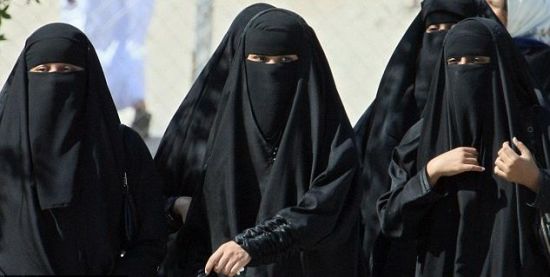
Unlike Christianity, Islam has never been through a real ‘Reformation.’ As a broad generalisation, Islam, whose year is now 1447 AD, (marking the supposed birth of Mohammed around 578 AD), drifted into slightly more ‘liberal’ positions over several centuries. But in the eighteenth century, Muhammad ibn Abd al-Wahhab (1703–1792 AD) started to promulgate a more fundamentalist, stricter form of Islam, which was then picked up much later and promoted by the Saudi Arabian royal family. There’s no doubt that this movement has had a global impact, and one which, it might be argued, had an opposite effect on Islam to that which the European Reformation had on Christianity; in other words it took Islam to more extreme and fundamentalist views. As one small example, I’ve heard from recent visitors that the friendliness between faiths in Senegal is not as it used to be, burqas and niqabs are everywhere and the total population (which has grown from 4 million to 16 million in 15 years!) is now 97% Islamic.
Is Islam homogenous?
Definitely not! And it’s worth reminding ourselves that Islam is not just a faith. In addition, it is a political system, an ideological system and a culture. Because of that, there are ‘shades’ of Islam in different parts of the world, which are more often than not heavily affected by their local culture and mores. Most people are aware that there are Sunni and Shia branches of the faith and that often the animosity between them is intense. But fewer would know that there are branches of Islam which are viewed as heretical by other branches, for example the Ismailis, the Hurufiya, the Alawis, the Bektashi, the Sufis and the Ahmadians. Islam has a global reach, but it has mainly spread outwards from a core in places in Africa, Saudi Arabia, Iran and the Middle East, Pakistan and Afghanistan. Unfortunately, some of the less enlightened cultures from that wide area have dominated the UK scene. In Pakistan, for example, there is an area called the Mirpur Valley, which even many Pakistanis living in Pakistan view as culturally backward. It was flooded for a hydro scheme in 1967 and most of the 100,000 people displaced ended up in small enclaves in northern England. Within such enclaves, views by our British standards are unenlightened, meaning, for example, that the menfolk actively prevent their women from learning English and integrating into the local population. As much as 20 years ago in East London, I found myself asking for directions and after 20 minutes had to give up, as I couldn’t find a single person of any age who spoke English. There’s no doubt that many Muslim populations still follow a benign, peaceful version of Islam, but they seem to have a deep reluctance to say anything that might be deemed to be criticism of their more extreme brothers and sisters. But ‘liberal’ views in Islam more widely are declining and ‘strict’ views are growing rapidly. Research shows that many youngsters are now more extreme than their parents. If you take the Muslim population of the UK as an example, one third of 16 to 24-year-olds, even including those born in the UK, think that the death penalty should be introduced for apostasy (renouncing Islam for another religion, or to become an atheist). Nine percent of UK Muslims identify themselves as ‘Jihadis;’ this equates to 40,000 people. Jihadists see ‘violent struggle’ as necessary to eradicate obstacles to ‘restoring’ Allah’s rule on Earth and defending the Muslim community. There are 45,000 Muslims on MI5’s terror ‘watch list’. In 2008, even three years after my 7/7/2005 experience, 80% of Muslims living in the UK were proud to call themselves British; that figure has now dropped to 40%, at the same time as the percentage of Muslims born and living in the UK has risen from 47% to an estimated 65%. The majority of Muslims of Pakistani heritage in the UK consider themselves to bear allegiance to Islam first, then Pakistan and finally (if at all) to the UK.
So, when talking about Islam, we need to avoid ‘tarring all Muslims with the same brush.’
What is the Islamic view of Allah through The Quran as opposed to the Christian view of the Trinity through the Holy Bible?
Some in Christianity claim that Islam is just a different route to the same God. But for those of us who’ve been brought up as Christians, it’s quite literally impossible to consider what it would do to our view of God, if it was claimed that God wished to encourage and celebrate acts of terrorism and extreme barbarity, let alone to support the annihilation of those who wouldn’t accept their theological views?
I’ve written in these pages in the past that the values of our Christian God run like messages through a stick of rock. These messages are love, tolerance, peace, justice, mercy, forgiveness, support for the downtrodden, generosity, grace, sympathy etc, etc These are the values that we were brought up with, and which colour every way in which we live our lives. They make us who we are, whether we’re active worshippers or not. And they’re compatible with most other belief systems and wider culture.
In contrast, the majority of Muslims in the UK believe that it is a sacred duty to convert others to Islam, using force if necessary. That, on its own, I’m afraid, sets my teeth on edge. Does this sound like our Christian God? And if not, then what does it sound like to you? I’ve never wanted to force anyone to adopt my beliefs.
13If a man has intercourse with a man as with a woman, both commit an abomination. They must be put to death. They must be put to death; their blood be on their own heads!
(Leviticus 20:13)
The quotation above from the book of Leviticus is, correctly and properly, no longer observed in Christianity. In fact, I’ve written in these pages before that we need to try to understand the social background of those who wrote the Bible. I am not, and never have been, in favour of rejecting people based on their sexuality; not least because the above verse is virtually the only reference to this issue in the entire Bible. But I’m permitted that luxury by my faith. Partly as a result of our Reformation, we no longer have to take the Bible literally, but are encouraged to allow God to speak to us through the words written through history. For more information, see:
But in Islam, not only is a literal reading of the Quran compulsory, but only the original Arabic text is permitted. Where would Christianity be, if we still believed that every word of the Bible was dictated by God to those who wrote them down; we would have to execute gays. Do those marching to support Hamas know? 52% of all Muslims in the UK think that homosexual acts should be illegal. In the wider population, that figure falls to 5%.
Is Islam a tolerant faith?
I don’t want this article to get sidetracked into a treatise on Israel and Gaza; I’ve written about that separately. But it’s impossible to ignore that the events of 7th October 2023 were acts of the most extreme barbarity. I find it depressing, for example, to know that those who committed these atrocities were gleeful and proud of their actions, as is proved by the live video taken (by themselves) at the time. Some of their acts of torture and slaughter were so horrendous that several of the Israeli survivors killed themselves, as they couldn’t live with the mental pictures. So, on the one hand we have Hamas terrorists who are proud of their barbarous acts and on the other we have those who’ve been so traumatised by those same acts that they can’t go on with life. Does this tell us something?
A lot has been written about the need for the Western nations to pay reparations for slavery in the past. I wonder how many of those calling for this are aware that among Islamic populations in Mali, slavery is still being practised, despite being illegal? And that slavery in Mauretania was only criminalised in 2007, and yet humanitarian organisations claim that there are still ‘tens of thousands of people in that country who live in situations of forced labour or domestic servitude.’
One of the founders of Hamas, Yahya Sinwar, said before his death in October 2024 that the only way to liberate Palestine was ‘by force, not negotiations.’ He also said:
‘We’ll take down the border (with Israel) and tear out their hearts from their bodies.’
Would I want the same for him and his supporters? Absolutely not; I think we know from history where such statements lead. But do those Londoners marching to support Hamas know what they’re supporting?
The Islamic view of women’s place in the world?
I was, of course, well aware of the views of women in Islamic teaching, even when I was in Senegal 56 years ago. But I have, rightly or wrongly, got the impression that in many parts of the Islamic world (not all) this has become more extreme.
I’ve written on this site about the views of women that prevailed in the time of Jesus. These mores are not dissimilar to the treatment of women now in modern Islam. See here:
But the point is that not only has Christianity left such views miles behind on the road, but actually we no longer, for the very best of reasons, consider such views to be socially or theologically acceptable. Islam has, if anything, gone in the entirely opposite direction. As proof that culture seriously affects Islamic teaching, the education of girls in Afghanistan is now illegal in that country, despite the fact that the Quran does not contain anything that demands this.
Many marriages in Pakistan are ‘forced marriages;’ it’s distressing to read that so-called ‘honour killings’ are also still permitted in some parts of the Islamic world. The view that women must submit to men is encouraged in some sects. One of the deepest mysteries in our world is why it is that feminists and LGBT + people celebrate Islam; they would seem to have nothing to gain and everything to lose from the rise of fundamentalist Islam? I suspect that they may simply be ignorant about Islamic teaching?
The issue of the ‘torture and rape gangs’ scandal has opened up for the first time for many people the fact that young under-age white British working class vulnerable girls have been treated like meat by gangs that are predominantly from the Mirpur Valley. Victims relate that they were called ‘white slags’ by their perpetrators. We know very little about this, as a result of several successive governments wishing to turn blind eyes to the issue. What we can safely say, however, is that what is known is the tip of the iceberg. So these gangs are a) not ‘Asian’ as the BBC insists, but almost entirely Pakistani b) are founded in racism against white people, who they view as inferior and c) are misogynist; they reflect the view that women are a kind of inferior race and particularly those from a working-class background. Please give me reasons why we should tolerate this in our country?
Why is such a high percentage of rape and sexual offences committed by people from these backgrounds?
This is an extremely difficult question to answer. To try to do so, we must look at the facts that we do know. Many of the survivors of the torture and rape scandals report that there does not seem to be any shame at these disgraceful acts from those communities. There are reports of Pakistani men being convicted (in the vanishingly rare number of cases that come to Court) and their female relatives shouting out their support as the sentence is handed down. For people of my background, this is almost impossible to understand. It becomes easier if we know that in parts of the Islamic world, the legal age for marriage and ‘consummation’ is 9, and Mohammed himself married a girl at 6 and consummated at 9.
This is repellent in our Christian culture, but it is completely normal in some of the Islamic world. Therefore, for them, there is no need to be ashamed, because according to their culture and laws, this behaviour is 100% acceptable, as long as it’s perpetrated against infidels. This is one of the reasons why we should strenuously resist the use of Sharia law in our country, and insist on members of these communities being educated about what is legal and what is expected in our culture. I genuinely don’t believe this to be a racist observation. When I used to travel to Malaysia, the disembarkation papers were marked in red ink that the possession and use of drugs in Malaysia carried the death penalty. We no longer have the death penalty in our country, but I wouldn’t dream of suggesting that Malaysia didn’t have the right to impose its own laws on those visiting their country.
There are other ‘Islamic’ practices in some countries. Female Genital Mutilation (FGM) is a barbaric practice that is common in some Islamic countries. Scandalously, it is not illegal in over 20 Islamic countries and it’s not mentioned in the Quran. This is another area where culture is seen to override Quranic teaching, but more ‘liberal’ Islamic teachers dare not criticise the practice. Why? Do they actually think that it’s acceptable?
Should marriage of first cousins be permitted?
Marriage of First Cousins was banned in the UK in the fifth century, and most people think it still is; but Henry VIII removed the law so that he could marry Catherine Howard, who was Anne Boleyn’s first cousin. The Book of Common Prayer’s Table of Kindred and Affinity lists prohibited marriages, but it does not include first cousins, for that reason. However, for many centuries such marriages were vanishingly rare (possibly because they were always discouraged by the Christian Church), until the picture changed with the mass immigration of recent decades, again particularly from those areas have been part of the culture of inter-marriage for generations.
Over half of all mothers of Pakistani heritage in the UK are married to their first or second cousins, and often this continues over many generations, thus compounding the problems of ‘inbreeding’, which is well documented. Amongst this population, the risk of being born with a serious birth defect increases from one in forty to one in fifteen. We only have to imagine the suffering that this practice imposes on innocent children and the fact that their parents are immune to this, for cultural reasons. Parliament is currently debating whether to change the law to make such marriages illegal, but I fear that if this happened, it would not be possible to prevent young people travelling to Pakistan, marrying their first cousins there, and travelling back again.
This is more or less what happens with polygamous marriage, which is still illegal in the UK.
Can you have several wives in the UK?
Polygamy has been illegal in the UK for more than 500 years. However, where second or subsequent marriages are made outside the UK, as long as neither party is resident in the UK at the time of the marriage, it is permitted. It is controversial that this law is more honoured in the breach than the observance. The House of Commons library confirms that the number of such households in the UK is ‘not known.’ The massive increase in the use of ‘Sharia Courts’ in the UK, by definition makes this issue far more difficult, if not impossible, to police. Forced marriages are illegal in the UK, but again there is evidence that Sharia Courts may be used as a means of bypassing UK law. Why should we accept this?
Can’t Christianity just live in peace with other faiths?
The answer to this is ‘of course’ we should do our very best to do so. And in the 1970s, I would not have had any caveats to this. I still have no caveats when it comes to other faiths, nor indeed to the more peaceful branches of Islam.
But there now must be a ‘but.’ The word Islam means submission in English. I have no problem with anyone wishing to be submissive to the God they worship. But I do have a problem with those who wish to force others, using violence if necessary, into Islamic submission. This is not the entire Islamic world, but it’s a part of it that is becoming bigger with time. I was appalled at the activities of ISIS, with beheadings of non-believers etc. And I genuinely thought that the worst of these extremist beliefs were behind us, after the defeat of ISIS. But you only need to read another quotation from the Hamas leader, Yahya Sinwar, to realise that it’s alive and well in certain sections of the Islamic world:
We support the eradication of Israel through armed jihad and struggle. This is our doctrine. The occupation must be swept from all our land.
I’m sorry to have to conclude with the inflammatory statement that parts of Islam are not civilised and are completely incompatible, not only with Christianity, but also with British culture and law more generally. Sadly, they are the parts that are growing fastest. I have no desire to force individuals who reject our mores, to abandon their faith. But if no effort is made to restrain the more extreme voices in their community, we need to massively reduce immigration, both legal and illegal, from those areas where the culture and the laws and the treatment of women is incompatible with being a British citizen.
And that is why, ultimately, I am vehemently opposed to PM Starmer’s statement yesterday that he intends to ‘recognise’ Palestine. Whose definition of Palestine is he using? Sinwar’s? That would mean the elimination of the entire Jewish population. Is that really what he’s calling for?
And that is also why I am vehemently opposed to the proposed ‘Islamic Blasphemy Law’, otherwise known as the government’s proposed definition of Islamophobia.
Heavenly Father, grant us the wisdom to generously welcome those into our country who genuinely wish to contribute to our Christianity-based culture. And, we pray, encourage moderate Muslims to educate those who seem to reject everything that our Christian country stands for, now and throughout our long history. Amen
Discover more from Reflective Preacher
Subscribe to get the latest posts sent to your email.
 Reflective Preacher